
Ladder-related incidents continue to be one of the most cited workplace safety issues. Did you know that 20% of lost workdays and fatal workplace injuries are caused by ladder falls in the general industry? This article attempts to cover some core ladder safety standards that can help keep your employees safe while avoiding OSHA fines and penalties.
OSHA Ladder Requirements (29 CFR 1910.23 & 1926.1053)
OSHA ladder regulations fall under two main standards:
- 29 CFR 1910.23 (General Industry)
- 29 CFR 1926.1053 (Construction)
Title 29 Code of Federal Regulations (CFR) Part 1910.23 helps break down OSHA guidelines for ladders on a high level. These standards outline how ladders must be designed, used, inspected, and maintained.
They apply to:
Fixed Ladders
Fixed ladders generally are permanently secured to equipment, buildings, and structures. OSHA requires:
- Minimum 7-inch clearance from the mounting surface
- Grab bars extending 3.5 feet above the landing surface
Additional requirements may apply for fall protection systems depending on ladder height and installation date.
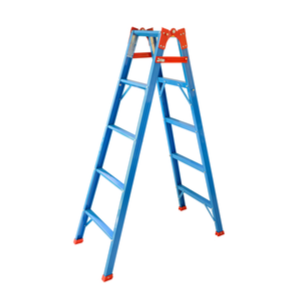
Portable Ladders
Portable ladders refer to side rails with rungs, steps, or cleats joining them. OSHA requires:
- Slip resistant rungs/steps
- Secure locking mechanisms
- Stable positioning during use
Mobile Ladder Stands and Platforms
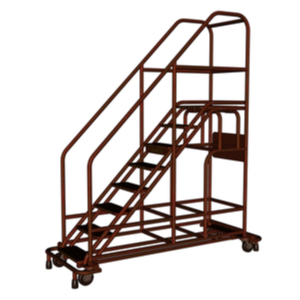
Mobile ladder stands and platforms must be slip-resistant and:
- Support 4× the maximum intended load
- Remain stationary while in use
- Have a base that fully supports the standing area
What is the 4:1 Ladder Rule?
The 4 to 1 ladder rule is one of the most searched and most violated ladder safety requirements.
For every 4 feet of vertical height, the base of the ladder must be placed 1 foot away from the wall or structure.
Example:
- 20-foot ladder → base should be 5 feet away
This angle helps prevent tip over and base slide incidents.

OSHA Ladder Inspection Requirements
Whose responsibility is it to keep ladders in good condition? Hint – it’s not up to each employee. The ladder safety guidelines within your organization should include a system for inspecting and maintaining ladders and taking them out of commission when necessary.
As we mentioned before, ladder inspection is one of the most cited OSHA violations. OSHA requires:
- Ladders must be inspected before each work shift
- Inspections must be performed by a competent person
- Any defective ladder must be removed from service immediately
When should ladders be inspected and by whom?
- Before initial use each shift
- After any incident that could affect safety
- By a competent person (someone capable of identifying hazards and authorized to take corrective action)
Key OSHA Inspection Rules
1926.1053(b)(2) – Keep ladders free of oil, grease, and slipping hazards
1926.1053(b)(15) – Inspect periodically and after damage events
1910.23(b)(9) – Inspect before each shift
1910.23(b)(10) – Tag defective ladders “Do Not Use” and remove them
Maximum Intended Load Rating for Portable Ladders
Safe ladder use per OSHA typically involves some weight parameters. OSHA ladder weight requirements are described at limits or multiples of the weight ratings and classifications ladder manufacturers assign to each unit.
Safe ladder use per OSHA involves defined weight limits set by manufacturers and reinforced by regulation.
OSHA requires that ladders are never loaded beyond their maximum intended load.
This includes:
- Worker body weight
- Tools and equipment
- Materials being carried
1910.23(c)(3) – Ladders must not exceed rated capacity
For fixed ladder systems:
1926.1053(a)(22)(i) – Must withstand a drop test of a 500-pound weight from 18 inches

OSHA Ladder Safety Rules for Use
Now that we’ve covered some of the types of ladders OSHA recognizes, how can employers ensure that employees use them safely?
Climbing ladders at work can be a relatively safe endeavor if your employees use common sense. However, OSHA includes specific requirements that must be followed on every job.
Basic Ladder Safety Requirements
1926.1053(b)(4) – Use ladders only for their intended purpose
1910.23(c)(4) – Place ladders on stable, level surfaces
1910.23(c)(6) – Do not move ladders while in use
1910.23(c)(9) – Secure ladders on slippery surfaces
Climbing and Handling Rules
1910.23(b)(11) – Always face the ladder when climbing
1910.23(b)(12) – Maintain at least one hand on the ladder
1926.1053(b)(22) – Do not carry loads that affect balance
If your team needs formal training on OSHA ladder safety requirements, Safety By Design’s OSHA 10-Hour General Industry Outreach Training covers ladder use, fall protection, and hazard recognition in more detail.
Portable Ladder Setup & Extension Requirements
For proper ladder safety training, ensure your employees follow extension guidelines when using ladders to access elevated surfaces.
Proper setup is one of the biggest factors in preventing falls.
1910.23(c)(11) – Side rails must extend at least 3 feet above the landing surface
1926.1053(a)(21)(iii) – Ladder width spacing must be between 27–30 inches
OSHA Ladder Fall Protection Requirements
Fall protection safety depends on ladder type and height.
For fixed ladders:
- Fall protection systems are required at certain heights
- Ladder cages alone are no longer accepted as primary protection on newer installations
For portable ladders:
- Maintain 3-point contact
- Keep body centered between rails
- Do not overreach
Common OSHA Ladder Violations
These are some of the most frequently cited issues during inspections:
- Failure to inspect ladders before use
- Using damaged/defective ladders
- Incorrect ladder angle (violating the 4:1 rule)
- Carrying materials while climbing
- Improper ladder extension above landing
Addressing these areas alone can reduce your risk of citations.
| WORKPLACE LADDER SAFETY CHECKLIST Use this quick checklist on-site: ✔ Ladder inspected before use ✔ Proper angle (4:1 rule applied) ✔ Ladder secured on stable surface ✔ No visible damage or defects ✔ Worker maintains 3-point contact ✔ Ladder extends 3 feet above landing |
Safety By Design Offers Ladder Safety Training in Houston
It can be challenging to keep up with every detail about OSHA ladder rules. Many times, avoiding unsafe ladder use is as easy as using some common sense. Other times, the OSHA ladder safety rules can be difficult to remember.
The Houston safety training available at Safety By Design can be tailored to include the most high-risk activities at your organization. If you’re concerned that you don’t even know what you don’t know about ladder safety, our safety compliance management services are right for you. Our safety staffing services can help you identify which of your safety processes aren’t compliant and how to improve their compliance and safety for a healthier workplace.
Contact us today to speak with a team member about how we can best serve your Texas workplace.
| Thank you for visiting our website! We appreciate your interest in workplace safety. Please note that Safety by Design is not affiliated with OSHA. However, we can assist you with the following OSHA-related services: • OSHA Mock Inspection • OSHA Training • Facilitate OSHA Inspections and Citations If you need to file a complaint with OSHA, please call 800-321-6742 (OSHA) or visit this page for other methods to contact them. |