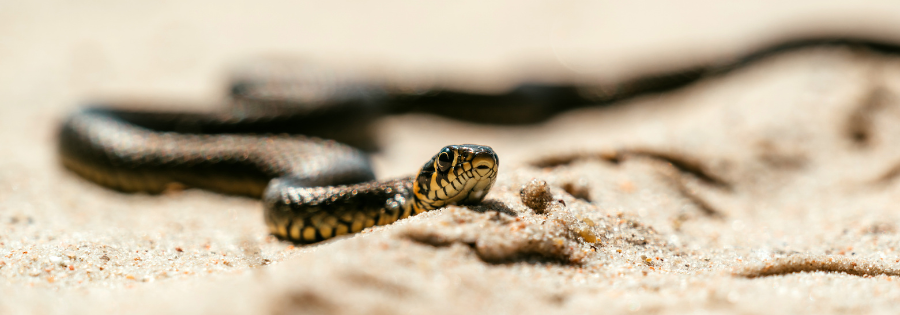
Snake safety training helps Texas employers prepare workers who may encounter venomous snakes on construction sites, energy facilities, utility projects, research properties, and other outdoor worksites. Training can focus on the snakes found in the area, how to avoid encounters, what to do after a bite, and safe handling procedures for workers who may be assigned to move or contain snakes.
OSHA’s construction standard says workers who may come into contact with harmful animals must be instructed about the hazards, ways to avoid injuries, and first-aid procedures to follow after an injury. This can apply to construction sites and other outdoor work areas where venomous snakes may be present. Employers should include snake hazards in job hazard analyses and site-specific safety procedures when workers may encounter them.
Training may discuss local snake species, site conditions, protective clothing, encounter response, emergency communication, and snakebite first aid. Safety By Design can also help employers with hazard identification and risk assessment as part of a broader workplace safety program.
Snake Safety Awareness Tips
Create a Snake-Safe Workplace: identify hotspots around the jobsite, close entry gaps around buildings, and create a snake safety and bite plan.
Stay Alert: Keep an eye out for any signs of snakes, such as their movement or distinctive patterns on the ground or in the vegetation.
Know When Snakes Are Active: In most of the United States, snakes are generally active from March through October.
Wear Appropriate Clothing: When working in snake-prone areas, wear long pants, closed-toe shoes, and thick socks to protect against potential snake bites. Gaiters or chaps may be more important for workers walking through grass or brush.
Watch Where You Step: Be cautious when walking in tall grass, rocky areas, or brush, as snakes may be hidden and camouflaged. Use a walking stick to probe ahead of you.
Educate Your Staff: Teach your employees about the venomous snakes native to your area and how to differentiate them from harmless species. Facilities operating near venomous snake habitats are recommended to have a trained team member that can properly move venomous snakes.
Know What to Do: In the event of a snake encounter, stay calm, slowly back away, and give the snake space to retreat. If bitten, seek medical attention immediately. Attempting to kill a snake is riskier and less safe than leaving it alone or having a trained responder capture and contain it.
By following these snake safety tips in the workplace, you can minimize the risks associated with snake encounters and stay safe in snake-prone areas.
Venomous Snakes Found in Texas
Texas is home to four major groups of venomous snakes:
Copperheads
Cottonmouths, also called water moccasins
Coral snakes
Rattlesnakes
Rattlesnake species found in parts of Texas include the western diamondback, timber, prairie, western massasauga, black-tailed, and rock rattlesnakes. The species workers may encounter depend on the region, habitat, season, and worksite location. Training should focus on the snakes native to the area where employees work.
What Does Snake Safety Training Include?
Snake safety training may be customized for the worksite and the species found in the region. Topics can include:
Identifying venomous and commonly confused nonvenomous snakes
Snake behavior, habitat, and seasonal activity
Avoiding encounters around brush, debris, equipment, buildings, and stored materials
Selecting appropriate clothing and personal protective equipment
Responding to a snake encounter
Bite prevention and emergency response
First-aid procedures and medical communication
Safe handling or relocation procedures for designated personnel
Site-specific snake safety and bite plans
Hands-on courses may include live venomous and nonvenomous snakes. Employees should not attempt to handle or relocate snakes unless they have received the appropriate training and have been specifically assigned that responsibility.
Texas Snake Safety Training and Services
Our safety training courses have been reviewed nationally by experts in the field and herpetologists. Safety By Design provides professional wildlife services for energy, construction, zoos, government, private, and ecological industries. Our services include:
Venomous snake safety and risk management training
Snake safety awareness seminars
Snake safety planning for businesses and organizations
Don’t take chances when it comes to your safety – choose us for nationwide snake safety training today.
U.S. Venomous Snake Safety Training
This course is designed for risk management, and it’s tailored to fit the needs of your team. We tailor each course to focus on the venomous snakes in your area. Topics include identification, natural history, first aid, encounter awareness, safety, and handling.
What’s included?
Skills lesson with live Venomous and non-venomous snakes
Venomous snake safety manual
U.S. venomous snake safety and handling certification
Delivery Options
Full-day, in-person at your location
Hybrid (online and in-person)
Additional Topics
Research – trapping and removal, measurements, tubing, probing, transmitters, PIT tags, and snakebite emergency planning
Construction – hazard recognition, OSHA compliance, snake safety awareness
Online Training
Regional Mini Courses (northwest, northeast, southwest, southeast, TX & OK and Midwest)
In-depth comparison of local venomous snake species
Includes commonly confused non-venomous and venomous snake species
Venomous Snakes Safety Awareness: Basics
Topics include identification, natural history, first aid, and safety. There is no handling or manipulation of lessons included.
Venomous Snake Safety + Handling Fundamentals
Topics include identification, natural history, first aid training, safety, and introduction to handling
Part 2 in-person handling skills lessons are available
Developed for: Safety managers, safety crew, maintenance, construction crew, energy, utility, first responders, military biologists, botanists, and animal control
Snake Safety Planning
Our specialists will work with you and your team to inventory, assess, and plan for venomous snakes around your property, workspace, or in your facilities in buildings. We will meet with your team remotely or in person to assess the property, identify risks, and establish custom safety plans.
Venomous Snake Safety Plan: Our venomous snake safety biologists will create a safety plan for your organization to help keep your team prepared to avoid snakebites. It will include the venomous snakes in your area, encounter avoidance techniques, best practices for relocation and removal, and a customized husbandry plan (if needed).
Venomous Snake Bite Plan: In the event of a venomous snake bite, your team will be ready in preparation for fast, immediate care. We will identify the best emergency services and determine if they have antivenom at the nearby hospital. The document will include a customized snake bite plan, what not to do, and a venomous animal escape plan (if needed).
Frequently Asked Questions
Does OSHA certify snake safety training?
No, OSHA does not issue a snake safety certification. A private training provider may provide a certificate or course completion record, but it does not come directly from OSHA.
Is snake safety training required for every Texas employer?
No, the need for training depends on the work employees perform and the hazards at the site. Employers with outdoor jobs, brush, stored materials, wildlife habitat, or known snake activity should evaluate the risk and provide appropriate instruction.
How often should employees take snake safety training?
There is no single schedule for every workplace. Refresher training may be needed when employees move to a new worksite, procedures change, or a snake encounter or near miss shows that workers need more instruction.
What information does a training provider need from an employer?
The provider may ask about the worksite location, employee duties, outdoor conditions, previous snake encounters, and the type of response employees may need to perform. A construction crew working in brush may need different instruction than a research team or animal control staff.
Can snake safety training be held at our Texas worksite?
Yes, in-person training can take place at the employer’s location. Hybrid courses are also available, combining online safety training with hands-on lessons when needed.
Contact Safety By Design for OSHA-Compliant Snake Safety Training in Texas
Snake safety training should be a priority for health and safety officers and supervisors to ensure a safe working environment for all employees. That’s why Safety By Design is now partnered with Adaptation on a mission to improve human-snake interactions and reduce snakebites through education. We are offering nationwide workshops and hands-on training to provide comprehensive education on snake safety, including proper handling techniques and appropriate snakebite treatment.