
Working at heights has its risks. But when done correctly, using the right equipment and training, tasks that require elevation don’t have to result in injuries or costly setbacks. Mobile Elevated Work Platforms (MEWPs) are a go-to for jobs that demand safe elevation, but they’re only as safe as the people operating them.
What is a MEWP?
A Mobile Elevated Work Platform (MEWP) is a powered platform designed to lift people to elevated work areas. They’re mobile, often able to extend both vertically and horizontally, depending on the type. MEWPs are designed to lift people, not materials.
Types of MEWPs include:
- Scissor Lifts (Type 3, Group A): Move up and down vertically. Commonly used indoors on level surfaces.
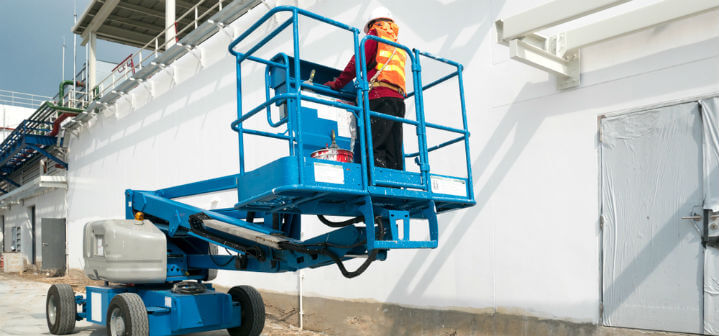
- Boom Lifts (Type 3, Group B): Extend both vertically and horizontally. Ideal for outdoor and uneven terrain.
- Vertical Mast Lifts: Compact and maneuverable. Best suited for tight indoor spaces.
Check out our scissor lift safety checklist here
Safety Tip: MEWPs should never be modified or used outside their intended purpose. Always consult the manufacturer’s manual.
Why MEWP Safety Training is Non-Negotiable
Every year, preventable incidents involving MEWPs lead to injuries, fatalities, and costly downtime. Falls, tip-overs, and power line contact are some of the most frequent (and serious) issues.
Proper training equips workers with the knowledge to:
- Understand the functions and limitations of the equipment
- Identify and control job site hazards
- Operate the MEWP safely under real working conditions
- React appropriately in emergencies
Both OSHA and ANSI require MEWP operator training, site-specific instruction, and documented proof of competence. There’s no gray area here.
Learn more: OSHA Manlift Safety Requirements
Who Needs MEWP Training?
It’s not just the operators who need to be trained. Anyone involved with MEWP use should receive the right safety training. That includes:
- Operators: Anyone controlling or using the MEWP
- Supervisors: Those overseeing the work
- Signalers/Spotters: Team members providing direction
- Maintenance Staff: Those inspecting or servicing the equipment
Both OSHA (29 CFR 1926.453 and 1910.67) and ANSI A92.24 require that training be tailored to the specific type of MEWP in use.
MEWP Training Requirements
Training should never be a check-the-box activity. A complete MEWP safety program should include:
Classroom or Online Instruction
- Equipment classifications and applications
- Proper use of fall protection
- Operating procedures and emergency response
- Site-specific risk factors and hazard controls
Hands-On Evaluation
Operators must show they can safely use the lift under actual or simulated job conditions.
Certification
Every trained individual should receive written proof (e.g., wallet card or certificate) indicating the specific equipment types they’re approved to operate
When is Retraining Required?
MEWP training isn’t one-and-done. Retraining is often needed when:
- A new type of MEWP is introduced
- An operator is involved in an incident or near miss
- Unsafe operation is observed
- Equipment hasn’t been used in a long time
- Company policies or safety regulations change
Pro Tip: Don’t wait until something goes wrong. Best practice is to retrain every 3 to 5 years (or sooner, if needed.)
Top Safety Hazards and How to Avoid Them
Even trained workers can run into trouble if safety protocols aren’t followed. Watch out for:
1. Tip-Overs
- Caused by uneven terrain, overloading, or improper setup
- Use outriggers and wheel chocks where needed
- Follow manufacturer load limits
2. Falls from Height
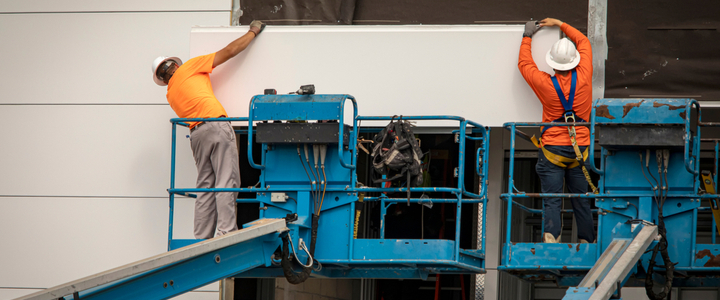
- Always use fall protection if required (lanyards, harnesses)
- Never climb out of the basket or stand on rails
3. Electrocution
- Maintain at least 10 feet of clearance from power lines
- Treat all wires as live unless verified otherwise
4. Crushing and Pinching
- Be aware of overhead obstructions, moving parts, and other workers
- Watch for trap hazards between the lift and nearby structures
5. Equipment Malfunctions
- Perform daily inspections before use
- Tag out defective equipment and report issues immediately
Daily MEWP Safety Checklist
Before operating a MEWP, make sure to:
✓ Inspect the platform, guardrails, and entry gate
✓ Check hydraulic, electrical, and mechanical systems
✓ Confirm fall protection is in place (as needed)
✓ Verify ground conditions are firm and level
✓ Watch for overhead hazards
✓ Ensure the work area is secure from traffic and other moving equipment
Need a Safety Partner? Safety by Design Can Help.
MEWP training is your first line of defense against injury and liability. At Safety by Design, we provide OSHA-compliant, ANSI-aligned fall protection training for scissor lifts, boom lifts, and more. We also provide compliance and safety management consulting to help companies build safer systems and keep operations on track.
Contact us today to learn more about our workplace safety services.