
Workers rely on fall protection equipment every day when working at height. These harnesses are built for tough jobsites, but exposure to weather, sunlight, chemicals, dirt, bad storage, and daily use wears them down over time.
A damaged harness might fail during a fall event. That is exactly why OSHA requires you to inspect fall protection equipment before every single use. It is also why third-party safety inspection services are a key part of maintaining jobsite compliance.
This checklist covers what to look for during a safety harness inspection and how to know when a harness needs to be thrown in the trash.
The Purpose Behind a Harness Inspection
Fall protection gear gets beat up in construction, manufacturing, utilities, and industrial plants. Daily wear is not always obvious when you just glance at the gear.
Over time, harnesses develop:
- Frayed webbing or broken stitches
- Bent or corroded hardware
- Chemical damage and UV degradation
- Missing safety labels
A quick routine inspection catches these issues before someone takes the equipment out into the field.
OSHA Requirements for Fall Protection Harness Inspection
OSHA says personal fall arrest systems must be inspected before each use for wear, damage, and deterioration. If you find defective equipment, it has to be removed from service immediately. It is the employer’s responsibility to make sure nobody uses damaged gear.
Many companies also perform periodic, documented fall protection harness inspections conducted by a “competent person.” These are more detailed than your daily pre-use check and keep your safety program compliant.

Harness Inspection Checklist
Take a few minutes to inspect every component before you put the harness on.
1. Inspect the Webbing & Load Indicators
The webbing handles the bulk of the load during a fall. Grab the straps and bend them in an upside-down “U” shape as you go. This opens up the fabric so you can see hidden damage inside the weave.
Look for:
- Cuts, tears, or frayed edges
- Abrasions or heavy wear
- Fading from sunlight (UV damage weakens synthetic fibers significantly)
Check the impact indicators: These are sections of webbing stitched together in a fold near the back D-ring. If the harness has taken a fall, that stitching rips open to reveal an alert tag. If those stitches are torn or stretched, the harness is done. Discard it.
2. Check the Stitching
Stitching usually fails before the actual webbing does. Look closely at the major attachment points where multiple straps join together.
Look for:
- Broken or pulled threads
- Loose or completely missing stitches
- Discoloration or charring from heat or chemicals
3. Examine D-Rings
D-rings take the impact forces during a fall. Check the main back (dorsal) D-ring, and any side rings used for positioning.
Look for:
- Cracks, bending, or warping
- Rust, pitting, or corrosion
- Sharp edges (a sharp edge on a rusted D-ring will slice right through your webbing under tension)
4. Inspect Buckles and Grommets
If your buckles don’t work, the harness won’t fit right, and a loose harness can cause severe internal injuries during a fall. Check all quick-connects, tongue buckles, and pass-through fasteners.
Look for:
- Bent or cracked metal components
- Corrosion or dirt buildup that stops the springs from clicking
- Deformed or missing metal grommets (eyelets) on the leg straps
5. Verify Labels and Identification Tags
Every harness has a data tag showing the manufacturer, model number, serial number, manufacture date, and compliance standards (OSHA/ANSI).
- If this label is missing, torn off, or painted over so you can’t read it, the harness fails inspection.
- Advice: You cannot legally use a harness if you can’t verify its history and ratings via the tag, even if the fabric looks brand new.
6. Look for Chemical and Heat Damage
Chemical exposure and extreme heat can severely weaken synthetic webbing even when the visual damage looks minor.
Inspect the fabric and components for:
- Chemical stains, discoloration, or paint overspray
- Brittleness, swelling, or hard, crusty spots
- Burn marks, melted fibers, or welding spatter
When Should a Harness Be Removed From Service?
The Golden Rule of Fall Protection:
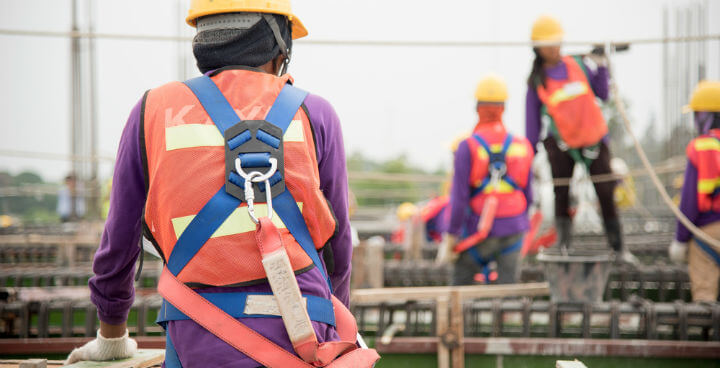
When in doubt, take it out. If a harness fails a single point on your harness inspection checklist, tag it out of service immediately and hand it over to your jobsite’s designated competent person. Continuing to use questionable equipment can place workers at unnecessary risk and create safety compliance issues for employers.
Do not try to stitch a torn strap back together yourself, and do not try to hammer a bent D-ring back into shape. Tag it “OUT OF SERVICE” immediately and put it somewhere separate so nobody else grabs it by mistake.
Common Harness Inspection Mistakes
- Only checking it once a month: A lot can happen to a harness in one shift. Pre-use means before every use.
- Missing the underside of the straps: People look at the front and forget to flip the straps over to check the side rubbing against clothing.
- Bad storage: Throwing harnesses into the bed of a truck where they sit in a puddle of oil, water, or direct sunlight will ruin them fast. Hang them up in a dry place.
- Assuming new gear is fine: Inspect harnesses right out of the box. Shipping damage happens.
Frequently Asked Questions
There is no fixed expiration date like five years, despite what some old rumors say. It depends entirely on how it’s used and stored. Follow the manufacturer’s guide, but rely on your daily inspection to decide when it’s time to retire it.
Common reasons include damaged webbing, broken stitching, bent or cracked hardware, missing labels, heat damage, chemical exposure, corrosion, and evidence that the harness has been involved in a fall arrest event.
OSHA requires the pre-use inspection, but they don’t require you to log paperwork for that daily check. However, ANSI standards and industry best practices require a documented inspection by a competent person every 6 to 12 months.
Hang them by the back D-ring in a clean, dry area. Keep them away from direct sunlight, extreme heat, moisture, sharp tools, and chemicals.
A pre-use check is done by the worker before their shift and isn’t written down. A competent person inspection is a formal, written audit done periodically by someone trained to manage safety equipment for the whole site.
Schedule Professional Safety Inspection Services
Ensuring your gear is compliant shouldn’t be guesswork. Safety by Design provides comprehensive safety consulting services to keep your facility OSHA-compliant and your workforce protected. Our trained competent persons manage everything from detailed fall protection harness inspections and SRL tracking to broader jobsite safety audits, providing the official documentation your safety program needs.
Contact Safety by Design today to schedule professional inspection services for your jobsite.