
OSHA requires written hot work permits in some workplaces. In others, the work must be inspected and authorized, but a written permit is not expressly required. The applicable rules depend on the industry, work area, and hazards present. Construction sites follow 29 CFR 1926 Subpart J, including the fire-prevention requirements in 1926.352.
What Does OSHA Consider Hot Work?
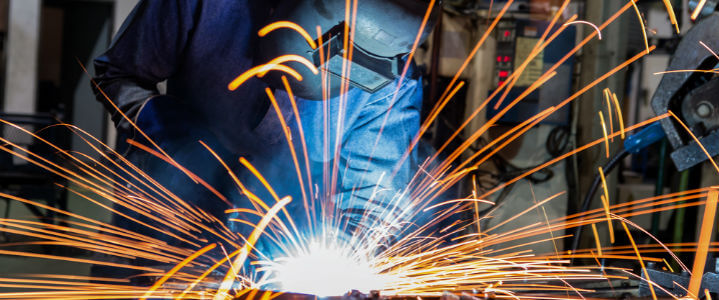
Hot work includes operations that produce flames, sparks, heat, or hot slag capable of starting a fire. Examples:
- Welding
- Torch cutting
- Brazing
- Soldering
- Grinding
- Heating with a torch
- Thawing pipes with an open flame
- Other spark-producing work near combustible materials
When Does OSHA Require a Hot Work Permit?
The OSHA hot work permit requirement depends on the industry and work location.
| Workplace or operation | OSHA requirement |
| General industry welding and cutting | Inspection and authorization are required. OSHA says written authorization is preferred. |
| PSM-regulated process | A written hot work permit is required. |
| Grain-handling facility | A permit is generally required, subject to stated exceptions. |
| Construction site | A permit is not prescribed for every job, but the requirements in 1926 Subpart J still apply. |
Employers commonly use permits even when the applicable standard does not expressly require written documentation. A permit records the inspection, required precautions, fire watch assignment, and authorized work period.
Written permits can be especially useful for contractor work. A contractor may know how to weld safely but may not know that a wall contains combustible insulation or that nearby equipment previously held a flammable product.
General Industry Requirements Under 1910.252
Under 29 CFR 1910.252, the person responsible for authorizing welding or cutting must inspect the area and identify the required precautions before work begins.
Management must also:
- Establish areas for routine welding and cutting
- Create procedures for work outside those areas
- Assign someone to authorize work in non-designated locations
Supervisors can use a hot work permitting toolbox talk to review authorization and fire-prevention procedures with employees.
PSM-Regulated Processes
For work subject to 29 CFR 1910.119(k), the permit must identify:
- The date or dates authorized for the work
- The object on which the work will be performed
The employer must keep the permit on file until the hot work is complete.
Grain-Handling Facilities
The grain-handling requirements in 29 CFR 1910.272(f) contain several permit exceptions. A permit is not required when the work takes place:
- In an employer-authorized welding shop
- In an authorized hot work area outside the grain-handling structure
- In the presence of the employer or an authorized representative who would otherwise issue the permit
What Should a Hot Work Permit Include?
OSHA does not prescribe one permit form for every workplace. A practical permit may include:
- Work location and description
- Equipment or object involved
- Authorized date and expiration time
- Person performing and authorizing the work
- Required fire-prevention measures
- Fire watch assignment
- Atmospheric test results, when required
- Post-work inspection
The permit should apply to one job, location, and work period. Employees must stop work if conditions change, such as a ventilation failure, process startup, new combustible material in the area, or a change in atmospheric test results.
Preparing an Area for Hot Work
OSHA requires welding and cutting to take place in an area that is fire-safe or has been made fire-safe. Before authorizing work outside a designated area, the inspection should address:
- Combustible materials within 35 feet
- Openings or ducts that sparks could pass through
- Combustibles on the opposite side of metal surfaces
- Lower floors beneath elevated work
- Available fire-extinguishing equipment
- Ventilation and atmospheric hazards
Combustible materials should be moved at least 35 feet away when practical. Materials that cannot be moved must be protected with suitable covers, shields, guards, or curtains.
Heat can travel through a wall, pipe, ceiling, or partition and ignite material on the opposite side. Used tanks, drums, and similar containers must be properly cleaned before hot work begins. Connected piping must be disconnected or blanked, and hollow spaces must be vented or purged as required.
Additional equipment and work-area precautions are included in this OSHA welding safety requirements checklist.
OSHA Hot Work Fire Watch Requirements
A fire watch is required when the inspection identifies combustible materials, concealed spaces, spark paths, or heat-transfer hazards that could allow more than a minor fire to develop.
The fire watch must have suitable extinguishing equipment and know how to use it. The assigned person must monitor exposed areas and know how to sound an alarm if a fire exceeds the available equipment or the person’s training.
Under general industry rules, the fire watch must remain for at least 30 minutes after welding or cutting ends. Site conditions, company procedures, fire codes, or another applicable standard may call for longer monitoring.
Construction rules use different wording. When normal precautions are not sufficient, personnel must guard against fire during the work and afterward until the remaining fire danger has passed. Safety by Design’s guide explains additional OSHA fire watch requirements for hot work.
Hot Work Training and Program Requirements
OSHA requires welders, cutters, and supervisors to receive suitable training in the safe operation of their equipment and processes. Fire watch personnel also need instruction on site hazards, extinguishing equipment, and alarm procedures.
A written hot work program should identify applicable tasks, designated work areas, permit issuers, inspection procedures, fire watch responsibilities, stop-work conditions, and contractor requirements.
Companies can address these duties through OSHA safety training for employees and supervisors and written safety program development based on the facility’s operations, equipment, and workforce.
How Long is an OSHA Hot Work Permit Valid?
OSHA does not set one permit duration for every workplace. The permit should state the authorized date or dates and remain limited to the job, location, and conditions inspected. Many employers limit permits to one shift or workday.
Develop Hot Work Procedures for Your Facility
Safety by Design helps employers develop hot work procedures, train employees, and define fire watch and permitting responsibilities. Contact our team to discuss OSHA compliance support for your facility or project.