
When work is happening overhead, even a small tool or loose fastener can put the crew below at risk. Dropped object prevention combines practical jobsite habits and protective equipment to keep tools, materials, and debris from falling. This guide explains OSHA falling object protection rules, toe board requirements, tool tethering, and steps employers can use to protect workers.
What is Dropped Object Prevention?
A dropped object is any tool, material, component, or piece of debris that falls from its previous position. “Dropped object prevention” and “falling object prevention” are often used to describe the same safety goal.
Some objects fall after being knocked from an edge. Others are dropped while being carried, transferred, or used. Wind, vibration, poor stacking, and unsecured containers can also cause materials to shift.
Common jobsite hazards include:
- Hand tools used from scaffolds, lifts, ladders, or structural steel
- Loose bolts, fittings, and other small parts
- Materials stored near roof or platform edges
- Debris passing through floor or wall openings
- Equipment being lifted or lowered
- Materials stacked higher than a toe board
These hazards should be addressed during pre-task planning and a jobsite hazard assessment, especially when several contractors are working in the same area.
OSHA Falling Object Protection Requirements
OSHA requires more than hard hats when employees are exposed to falling objects. Employers must also prevent objects from falling, provide overhead protection, or keep employees out of the area where objects could land.
Under 29 CFR 1926.501(c), employers must provide hard hats and implement at least one additional protective measure. Options include:
- Toe boards, screens, or guardrails that stop objects from falling
- A canopy placed between the hazard and employees
- A barricaded area that employees are prohibited from entering
- Materials and equipment positioned far enough from an edge to prevent accidental displacement
Other standards apply to specific operations. OSHA’s scaffold rules address tools, debris, and materials that could fall from platforms. During steel erection, 29 CFR 1926.759 requires tools, equipment, and materials not in use aloft to be secured against accidental displacement.
OSHA Toe Board Requirements
Under 29 CFR 1926.502(j), a toe board used for falling object protection must:
- Be at least 3½ inches high
- Have no more than ¼ inch of clearance above the working surface
- Withstand at least 50 pounds of force applied downward or outward
- Be solid or have openings no larger than 1 inch
If tools or materials are stacked higher than the toe board, screening or paneling must extend upward to the guardrail’s top rail or midrail. A toe board alone cannot stop objects stored above its upper edge.
Scaffold requirements contain additional provisions. When falling objects could strike employees below, employers may barricade the area or use toe boards, screens, guardrails, debris nets, catch platforms, or canopies as permitted by the standard.
Does OSHA Require Tool Tethering?
OSHA does not have a universal rule requiring every hand tool used at height to have a tether. It does require employers to protect workers from falling objects, and some standards require tools or materials to be secured.
Tool tethering is one method employers can use to meet that goal. Tethers should be rated for the tool’s weight and connected to an approved attachment point. Workers should inspect the tether, connector, and tool attachment before use. Damaged cords, makeshift attachment points, and tethers that interfere with safe tool operation should be removed from service.
ANSI/ISEA 121-2023 provides additional guidance for dropped object prevention equipment. This voluntary consensus standard establishes design, testing, performance, and labeling requirements for tool tethers, tool attachments, anchor attachments, and containers used to transport tools at height.
Following ANSI/ISEA 121-2023 does not replace applicable OSHA requirements. Tool tethers also do not replace toe boards, barricades, secure material storage, or other controls required for the task.
Dropped Object and Overhead Work Safety Practices
Good overhead work safety starts before anyone climbs a ladder or enters a lift. Crews should review what will be carried upward, where small parts will be stored, and who could enter the area below.
Dropped object controls should be coordinated with fall protection safety procedures for employees working from scaffolds, lifts, roofs, or structural steel.
Keep loose hardware in secured containers instead of placing it on rails, beams, or platform decks. Remove scraps and packaging regularly so they cannot be kicked or blown from the work surface. Tools that are not in use should be placed in a secured bag, bucket, or storage system.
Barricades must match the actual hazard. An object may bounce, roll, or deflect after striking a structure. A narrow boundary directly beneath the work may not provide enough protection. Signs and caution tape also accomplish little if workers continue entering the restricted area.
Scheduling can reduce exposure. When possible, do not place one crew directly below another. Supervisors should coordinate overhead tasks during daily planning meetings, particularly on crowded construction sites with several trades working at once.
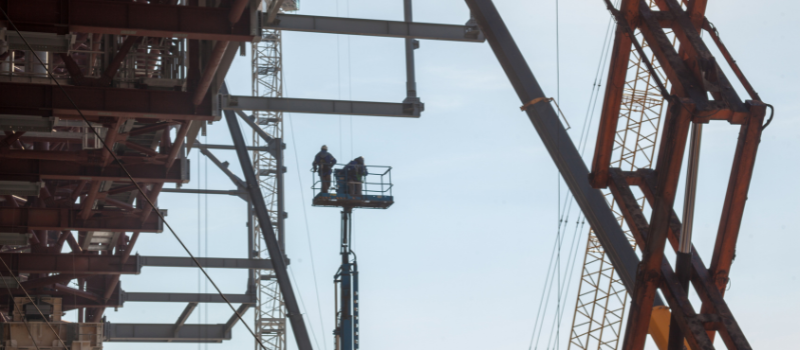
How to Create a Dropped Object Prevention Plan
OSHA does not generally require a document with the specific title “dropped object prevention plan.” Still, a written plan can help a company apply consistent procedures across crews, contractors, and changing work areas.
Start by reviewing work involving scaffolds, roofs, lifts, platforms, cranes, structural steel, and floor openings. For each task, document the objects that could fall, the employees who could be exposed, and the controls required before work begins.
The plan should assign responsibility for inspecting toe boards, tool tethers, storage containers, barricades, and access points. It should also explain how damaged equipment is removed from service, how dropped-object incidents and near misses are reported, and when work must stop.
Training should reflect the equipment and conditions employees actually encounter. A short field demonstration showing how to attach a tether, secure small parts, or establish an exclusion zone can be more useful than reading a policy without applying it to the job. Safety By Design offers safety training in Houston for construction, industrial, and commercial employers.
Improve Falling Object Prevention on Your Jobsite with Safety By Design
Jobsites change as crews, materials, and work areas move. A dropped object prevention plan helps everyone know how tools should be secured, where restricted areas belong, and what needs to be checked before overhead work begins.
Need a second set of eyes on your current procedures? Safety By Design can help with hazard assessments, employee training, safety inspections, and safety program development.
Contact Safety By Design to discuss safety consulting and training for your workforce.