
Before hazardous work starts, the crew and operations team need to agree on what is authorized and which precautions are in place. A permit to work system documents that agreement, but the paperwork only helps if it matches conditions on the floor.
What is a Permit to Work System?
A permit to work system is a formal process for authorizing designated hazardous work at a specific location and during a defined period. It documents the job, hazards, precautions and people responsible for approving and performing it.
Three parts work together:
- System: The overall framework for managing work permits.
- Procedure: The rules for issuing, suspending, transferring and closing permits.
- Form: The record of authorization for an individual job.
A permit does not replace a workplace hazard assessment, task-specific training or physical hazard controls. It records how those preparations apply to the authorized work.
Common Types of Work Permits
Permit categories vary by facility. Typical applications include the following:
| Permit type | Work it may authorize | Issues to address |
| Hot work | Welding, cutting and other flame- or spark-producing work | Combustible materials, ignition sources, atmospheric conditions and fire watch arrangements |
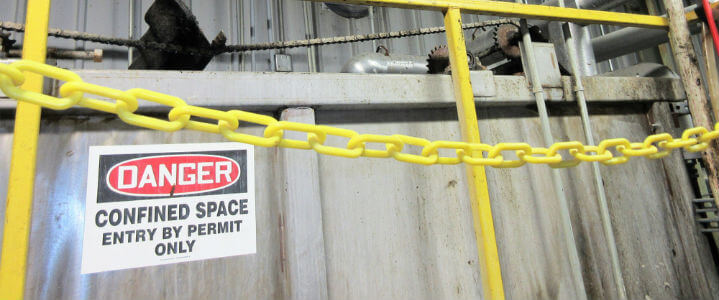
| Confined space entry | Entry under a permit-required confined space program | Isolation, atmospheric testing, entry roles, communication and rescue arrangements |
| Line breaking | Opening piping or equipment that contains hazardous material | Contents, pressure, temperature, draining and isolation |
| Electrical work | Designated electrical activities under the employer’s safety program | Deenergization, energy isolation, worker qualifications and electrical exposure |
| Excavation | Ground disturbance under a site permit procedure | Underground utilities, nearby operations and excavation hazards |
These are not all universal OSHA permit requirements. Some permits arise from specific regulations, while others are established by facility procedures or other applicable standards. A work permit also does not replace lockout/tagout.
For entry work, our confined space safety guide provides additional background on hazards and employee responsibilities.
Does OSHA Require a Permit to Work System?
OSHA does not prescribe one general permit to work system for every hazardous task. Requirements depend on the work and the applicable standard.
For example:
- General industry confined spaces: 29 CFR 1910.146 establishes a permit system for permit-space entry, with specified alternatives and exceptions.
- Construction confined spaces: 29 CFR 1926 Subpart AA contains separate program, permitting and entry requirements.
- Hot work under Process Safety Management: 29 CFR 1910.119(k) requires a hot work permit for operations on or near a process subject to that standard.
OSHA’s general industry welding and cutting standard also requires inspection and authorization before work, describing a written permit as the preferred form of authorization. That wording differs from the explicit permit requirement under Process Safety Management.
Determine which requirements apply before choosing a template. Calling a document an “OSHA permit” does not establish compliance.
How Does the Permit to Work Process Work?
The permit to work process connects job planning, field verification and authorization with monitoring and equipment handback. Each stage establishes what must happen before the job moves forward.
1. The Job scope and nearby activities are reviewed.
The responsible personnel identify the equipment, location, task boundaries and workers involved. They also review nearby activities that could affect the job.
For example, welding and solvent handling may each have separate approvals, but those approvals need coordination if the work occurs in the same area. Linked permits and conflicting activities should be identified before authorization.
2. Required precautions are verified at the worksite.
Designated personnel confirm that required isolation, testing, barriers and other precautions are in place. They record the checks and results required by the applicable procedure. Approval should reflect existing conditions, not controls someone plans to install later. Differences between the worksite and job plan must be resolved before work begins.
3. An authorized person approves the work and the crew is briefed.
The designated authorizer verifies that permit conditions have been met. The crew receives the authorized scope, limits, communication arrangements and conditions that require stopping work.
Affected operations personnel and contractors also need this information. Task-specific safety training remains necessary; signing a permit does not demonstrate competence.
4. Changing conditions trigger reassessment.
A permit authorizes defined work under defined conditions. Changes in scope, equipment status, atmosphere or nearby operations can invalidate that authorization. The crew follows applicable rules for stopping work, making the area safe and obtaining reassessment. The permit to work procedure should also address interruptions, expiration and shift handovers.
5. Completed work is documented and equipment is handed back.
Responsible personnel record the work status, unresolved restrictions and condition of the area. Equipment handback and return to service are coordinated with operations, following applicable energy-control procedures.
Records are retained according to the relevant requirements. Retention periods differ: general industry canceled confined space entry permits must be retained for at least one year, while the PSM hot work provision requires retention until the work is complete.
What Should a Permit to Work Form Include?
A permit to work form should identify the authorization and document its conditions. Typical fields include:
- Permit number, type, location and equipment identification
- Work description and authorized dates or times
- Hazards, precautions and references to linked permits or isolation records
- Required test results, including who tested and when
- Responsible personnel and approval signatures
- Conditions for stopping work or reassessment
- Completion status and handback acknowledgment
This is a starting framework. Task-specific permits may require additional information, such as entrants, attendants and rescue arrangements for confined space entry.
Example work description: “Weld replacement bracket on conveyor CV-04 at the east maintenance bay.” That is more useful than “maintenance work,” which leaves the equipment, location and task unclear.
Get Help with Your Permit to Work Procedure
Safety by Design offers safety program development and confined space, fire watch and electrical safety training to support hazardous work planning. Contact our safety consultants today for help developing and/or reviewing your permit to work procedure.


