
Warehouses, factories, restaurants, hospitals, and other types of businesses typically have loading docks. These loading docks are essential to a reliable business supply chain. However, there are certain loading dock safety procedures that employees and employers must follow.
What is a Loading Dock?
Loading docks are key logistical component for many businesses. The Department of Transportation reports that 55 million tons of goods worth more than $49 billion each day are part of the freight network that includes loading docks.
Warehouse docks are areas where delivery vehicles can pull up and unload. The docks are raised to a certain height to account for the height of cargo vehicles. While it is a common and essential part of business operations, loading docks also account for 25% of warehouse-related injuries.
6 Common Loading Dock Safety Hazards
Loading dock safety seems simple, don’t fall off the edge. If an employee avoids doing this, everything seems to meet safety compliance regulations. The only problem is employers also must take steps to ensure the safety of employees in warehouse and on the loading dock. It’s not enough to let employees know not to fall off the edge, employers must help prevent it.
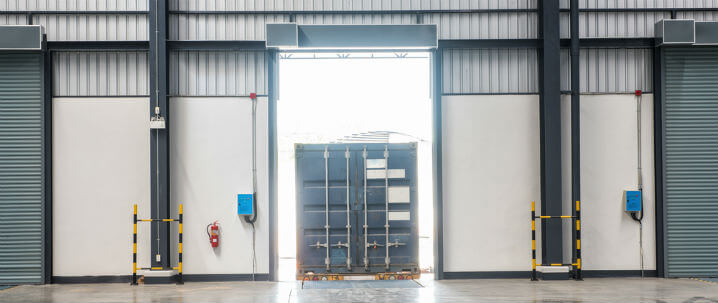
Some loading dock safety hazards are easy to envision, others aren’t as obvious.
- If the warehouse dock is slippery from moisture or oil it is a hazard to employees.
- Loose dock plates often result in slips and falls.
- Injuries from trailer wheels not properly chocked
- Illness due to carbon monoxide exposure from vehicle exhaust.
- Back injuries due to improper lifting and carrying of goods.
- Injuries from forklift hazards.
Forklifts are common on loading docks and are responsible for some of the injuries that occur at the job site.
OSHA Loading Dock Requirements and Safety Standards
The following loading dock safety guide will guide employers through the necessary safety steps. Some tips are simple, such as installing loading dock protective barriers, while others are more complicated. For example, what if the loading dock doesn’t meet OSHA code requirements for height or safety?
The height of the warehouse dock and accompanying loading dock safety barriers aren’t the only safety aspects OSHA looks for, clear vision from all angles on the loading dock is also vital for safety. A company’s loading dock should also be visible, which is why yellow stripes at the edge are common. The bright color helps ensure employees are visible and drivers can see the loading dock.
5 Loading Dock Safety Tips for OSHA Compliance
OSHA loading dock fall protection includes safety tips that will prevent incidents.
1. Forklift Safety
It is easy to misgauge the distance from the loading dock edge in a forklift. Yellow lines at the dock’s edge will help prevent forklifts from falling off docks. There are also other steps businesses can take to ensure forklifts don’t go over the dock’s edge.
Protective barriers around loading docks, such as chains or bars can prevent forklifts from tipping over the side. When it comes to driving a forklift on a flatbed trailer, OSHA recommends only doing so when there isn’t a gap in height or distance. If the tailer is flush against the loading dock, a forklift can safely load and unload the product.
Safety By Design offers OSHA-aligned forklift training in Houston. Contact us for more information on our program availability.
2. OSHA Compliant Dock Barriers
A company’s loading dock safety checklist must include safety barriers. According to OSHA standard 29 CFR 1910.28(b)(1)(i), a dock that creates a drop of four feet or more must be guarded with a barrier.
Chains are one-way employers can create a barrier, but bars are often recommended. Bars often have less give than chains and can prevent a forklift or individual from falling off the loading dock.
3. Limit Vehicle and Pedestrian Traffic
The “Pedestrian Sweep” is a critical 2026 protocol: all non-essential staff must exit the bay before loading begins. Establish “No-Walk” zones using permanent floor markings or physical rails. In high-noise environments, use Blue Spot light technology on forklifts to project a warning beam onto the floor, alerting workers who may not hear an approaching vehicle over the sound of dock fans.
4. Keep the Loading Dock Clean
Loading docks, whether at warehouses or other businesses are susceptible to the weather. Leaves and other debris should be regularly swept away. Water can also collect, resulting in dangerous working conditions.
Oil from forklifts can also cause employees to slip and fall. Forklifts can also experience problems with slick loading dock floors. Loading dock code requirements state that the floors must be clear of debris and moisture, along with oil.
See our related resources for more information on warehouse safety training for your team.
5. Ensure Trailer, Air, and Heat Safety
Parking “close” to the dock is no longer the standard; trailers must be physically secured. Use mechanical vehicle restraints (dock locks) to prevent “trailer creep” or early pull-away incidents. If a trailer is detached from the truck, you must use trailer jack stands at the nose to prevent the trailer from tipping (up-ending).
Ventilation is also key. OSHA loading docks requirements state that employers must ensure proper ventilation to prevent overexposure to carbon monoxide. The poisonous gas is emitted from vehicle exhaust and is fatal if inhaled over prolonged periods.
Safety By Design Offers Comprehensive Safety Consulting
Loading dock safety is more than installing protective barriers, it is a major part of maintaining OSHA compliance in warehouse operations. It requires planning and OSHA-related safety training courses. If your business needs loading dock safety tips or help creating a safe work environment, the safety consultants at Safety By Design can help!
Contact Safety By Design today to schedule a consultation for your occupational safety.